A Game of Shadows: Israel’s Missile Defenses Against Iran’s Hypersonic Innovations
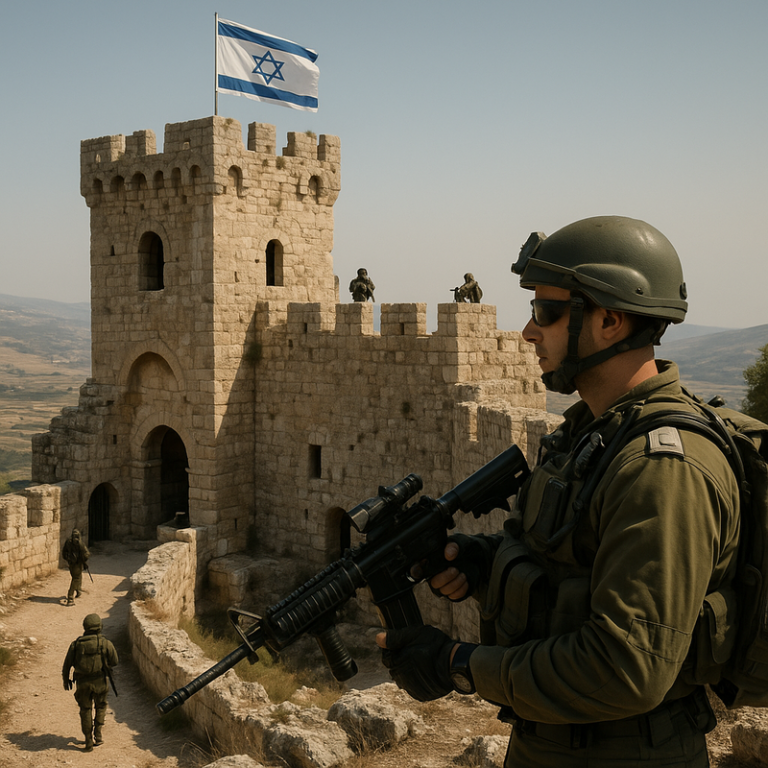
In a region defined by its harsh sun and hotter tempers, Israel finds itself grappling with an alarming contradiction: it boasts one of the world’s most sophisticated missile defense systems while simultaneously facing a budding menace from Iran’s latest hypersonic missile technology. To think that these airborne daggers are taking flight while Israel’s defenses run short is an irony replete with historical echoes, reminding us that even the mightiest towers can be pierced by unexpected arrows. 🏹
Recent reports indicate that the ever-evolving dynamics of confrontation have put Israel’s famed Iron Dome and other defenses to the ultimate test. As Iran accelerates its development of hypersonic weapons—including those that could zoom across aerial defenses at multiple times the speed of sound—questions loom large: How prepared is Israel really? And can a defense built for the complexities of today’s warfare handle the unpredictable trajectories of tomorrow’s missiles?
Missile Defense Systems: A Modern Fortress or a Sandcastle?
Israel’s missile defense is often heralded as a near-miraculous achievement of military engineering. The Iron Dome intercepts short-range projectiles with a success rate that would make any archer pale in envy. Yet, in a cruel twist of fate, this achievement may resemble a sandcastle on the beach, only awaiting the next high tide of missile technology to wash it away.
“The Iron Dome works best against predictable threats; hypersonics are by nature less predictable,” notes Dr. Avi Cohen, a defense technology analyst. “What we’re witnessing is a paradigm shift in warfare, one that could render current technologies obsolete overnight.”
Understand the Hypersonic Threat: A Generational Leap
Hypersonic missiles are akin to lightning bolts, their speed and agility defying conventional interception strategies. They travel at speeds exceeding Mach 5 and can change direction mid-flight, making them nearly impossible for existing systems, including the Iron Dome, to counteract. The implications are stark: a system designed to intercept a volley of predictable rockets now has to contend with missiles that dance around traditional defenses like dry leaves in autumn.
Technological Limits: The Iron Dome vs. Emerging Sophistication
Israel’s formidable military is not blind to these emerging threats. The recent intensification of Iranian missile tests has sent ripples of anxiety through Israeli defense sectors. Despite significant investments in advanced technology, the situation begs for an exploration of deeper contrasts: a beautifully crafted shield crafted by human ingenuity, now battling an unyielding spear forged by a strategic adversary. Can innovation keep pace?
The government has already begun seeking new solutions, including adopting advanced radar systems designed to detect the speed of hypersonic projectiles earlier. Unfortunately, these systems could take years to implement, thus leaving Israel at a potential crossroads—embracing an arms race or finding diplomatic solutions in an increasingly hostile arena.
The Bigger Picture: Is Vulnerability the New Reality?
Faced with such adjournments, one must consider the broader implications. Should Israel defiantly cling to its missile defenses as a shield or should it innovate a strategy that mitigates the threat at its roots? It’s a diplomatic dilemma layered with complexities palpable as a summer haze. Or will it remain trapped in an escalating cycle of defense and retaliation, where a single miscalculation could spell disaster?
This dilemma brings forth the question: Can one nation continue to hold its position as the region’s military powerhouse while grappling with the accelerating pace of technology? The fact that Iran is altering the strategic landscape could serve as both a wake-up call and a motivator for Israel to adapt or transform its defensive protocols.
A Future Unwritten: Navigating Uncertainty
The truth behind this cat-and-mouse game is that as long as adversaries persist in developing advanced military technologies, nations like Israel will have no choice but to up their game or risk becoming outdated. It feels somewhat poetic, as if history has a ruthless penchant for repeating itself—each nation entwined in a dance of strategy, power, and inevitability. 🤔
In the theater of war, where each player dons a mask of resolve, Israel must now grapple with its own vulnerabilities. As hypersonic technologies echo down the corridors of time, the space between conflict and diplomacy appears narrower than ever before. Will Israel rise to meet the challenges ahead, forging alliances and innovations, or will it find itself ensnared within the shadow of its own defenses? Only time, like the passage of a fleeting missile through the sky, will tell.